














Here are two practical, tailored sample profile sections you could use or adapt for an SDGZero.com listing. These are designed to be proportionate and low-burden for an SME or small/medium UK charity, while voluntarily aligning with key elements of UK SRS S1 (general sustainability disclosures: governance, strategy, risks/opportunities) and UK SRS S2 (climate focus: governance, strategy, risks, metrics/targets, especially Scope 1 & 2 emissions with transitional reliefs for Scope 3).
They draw from common UK practices: simple narratives, basic metrics (using free tools like UK BEIS conversion factors or SME Voluntary Emissions Standard-style data), and SDG mapping. Keep them concise (e.g. 300–600 words total per profile), update quarterly, and include visuals like charts if the platform allows.
1. Sample for a Small UK Charity (e.g. Community Environmental or Support Organisation)
Profile Section: Our Sustainability Commitment & UK SRS Alignment
Organisation Overview
[Charity Name] is a UK-registered charity delivering [brief mission, e.g., community support services, environmental education, or local conservation projects] across [region(s)]. We serve [X] service users annually and are committed to operating responsibly while advancing the UN Sustainable Development Goals (SDGs).
Governance (UK SRS S1 Alignment)
Sustainability is overseen by our Trustee Board, with a designated Trustee lead on environmental and impact matters. We review progress quarterly at board meetings and integrate it into our annual Trustee Report (Charity Commission requirements).
Strategy & Material Issues (UK SRS S1 & S2)
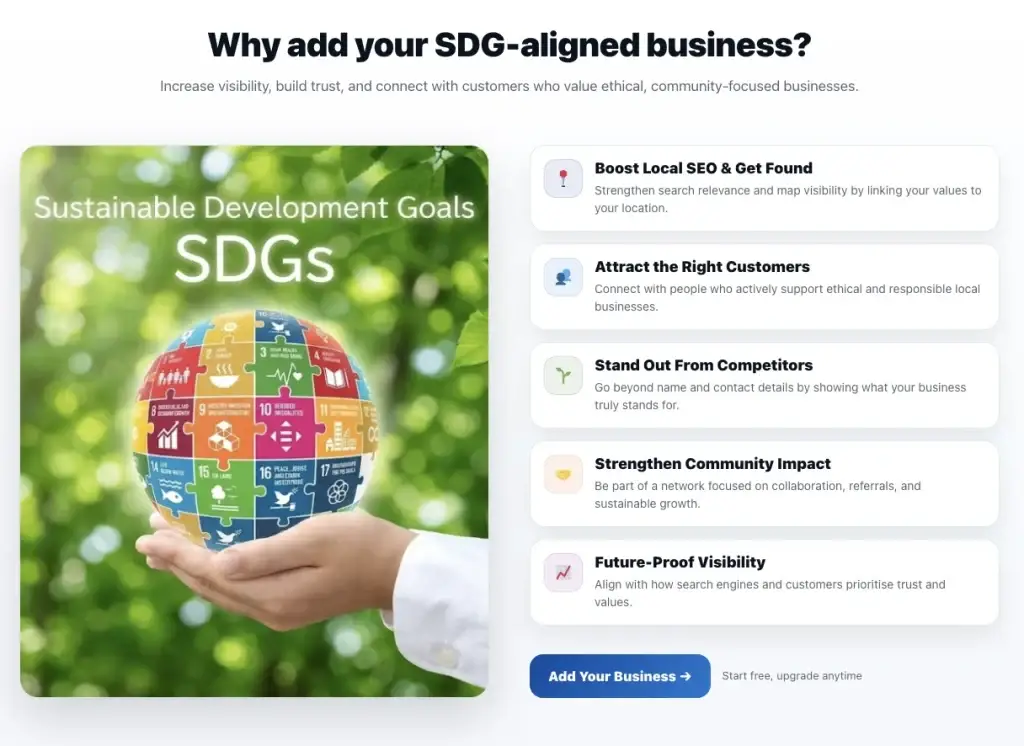
Our core work directly supports multiple SDGs, including:
• SDG 13: Climate Action – Reducing our environmental footprint to build community resilience.
• SDG 11: Sustainable Cities & Communities – Promoting local green initiatives.
• SDG 3: Good Health & Well-Being – Supporting vulnerable groups through sustainable practices.
Key material risks: Rising energy costs impacting service delivery; opportunities: Attracting eco-focused donors/grants by demonstrating low-carbon operations.
Climate Metrics & Targets (UK SRS S2 Focus – Voluntary & Proportionate)
We report basic Scope 1 & 2 emissions (direct operations + purchased electricity) using UK government BEIS conversion factors and utility data. Scope 3 (e.g., travel, events) is estimated qualitatively or via simple tools – we plan fuller inclusion as capacity grows (transitional approach).
• 2025 Baseline (latest full year):
• Scope 1: 2.5 tCO₂e (gas heating, minimal fleet).
• Scope 2: 4.8 tCO₂e (location-based; we switched to 100% renewable tariffs in 2025, reducing market-based to near zero).
• Intensity: ~0.15 tCO₂e per £10,000 income (normalised for scale).
• Targets: Reduce total Scope 1 & 2 emissions by 20% by 2028 (from 2025 baseline) through energy-efficient upgrades, virtual events, and staff active travel policies.
• Progress Updates (Quarterly Example – Add New Ones Regularly):
Q1 2026: Installed LED lighting across offices (estimated 15% energy saving); hosted 3 low-carbon community events. No major incidents.
This profile demonstrates our proactive, transparent approach to sustainability—helping donors, trustees, service users, and grantmakers see verifiable impact aligned with UK expectations.
2. Sample for a Small/Medium UK SME (e.g., Service-Based Business or Supplier)
Profile Section: Sustainability & UK SRS Alignment
Business Overview
[Company Name] is a UK-based SME providing [e.g., professional services, retail, or manufacturing support] with [X] employees and £[Y]m turnover. We embed sustainability to reduce risks, cut costs, and support client/partner goals.
Governance (UK SRS S1)
Led by our Managing Director with input from a small sustainability working group (including staff reps). Reviewed biannually; integrated into board agenda and annual accounts narrative.
Strategy & Material Sustainability Issues (UK SRS S1 & S2)
We prioritise issues material to our operations and value chain:
• SDG 13: Climate Action – Decarbonising energy use and travel.
• SDG 12: Responsible Consumption & Production – Waste reduction and circular practices.
• SDG 8: Decent Work & Economic Growth – Ethical supply chain.
Risks: Energy price volatility, supply-chain emissions requests from larger clients. Opportunities: Winning tenders requiring sustainability proof; cost savings from efficiency.
Climate Metrics & Targets (UK SRS S2 – Voluntary Starter)
Using the UK SME Voluntary Emissions Standard approach (simple Excel-style tracking):
2025 Data:
• Scope 1: 8.2 tCO₂e (company vehicles/gas).
• Scope 2: 12.5 tCO₂e (location-based electricity; market-based lower after green tariff switch).
• Key Scope 3 (selected): Business travel ~15 tCO₂e; waste ~3 tCO₂e.
• Targets: Achieve 25% reduction in Scope 1 & 2 by 2028 via EV transition, remote work policies, and energy audits. Long-term: Net-zero operations by 2040.
Recent Actions (Update Quarterly):
Q1 2026: Audited energy use; reduced business flights by 40% via video alternatives. Client feedback: Positive on our profile visibility for tenders.
This section keeps disclosures simple yet credible – ideal for responding to partner requests, enhancing bids, or building trust with stakeholders.
Tips for SDGZero.com Implementation:
• Start with one SDG focus if overwhelming (e.g., SDG 13 for climate).
• Add free visuals: Simple charts (e.g., emissions bar graph) or photos of actions (e.g., solar panels, community events).
• Reference sources: “Data calculated per BEIS factors” or “Aligned with UK SRS voluntary principles.”
• Update regularly: Quarterly posts build the “ongoing disclosure” habit UK SRS encourages.
These examples are starter templates – customise with your real data (use free calculators like the Carbon Trust SME tool or gov.uk emissions factors). If you provide more details about your organisation (e.g., sector, size, key impacts), I can refine them further!