














One of the joys of the new normal work-from-anywhere trend is the ability to invest in more than a season rail ticket and a latte from the café on the corner.
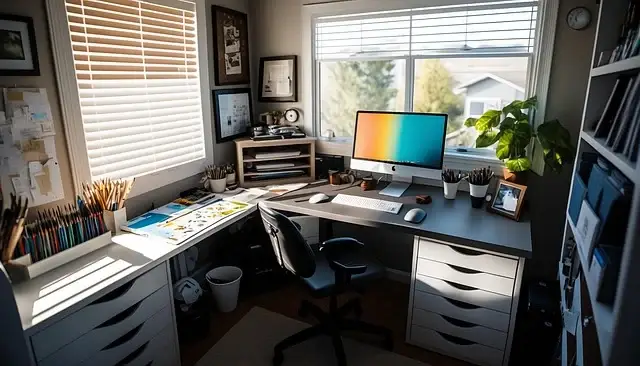
Many of today’s small businesses have woken up to the fact that it pays huge dividends to put the cash they spend on that commute, a shared office and co-working spaces into what had previously been seen as a mere garden shed.
And that’s before we begin examining the positive effects of travel, industrial waste and energy reductions, let alone the potential for biodiversity and the fact that your favourite co-worker can even pop in via the catflap.
But it’s a growing trend that shows no sign of abating. In the year before Lockdown, Churchill Home Insurance estimated around 10,000 applications to build garden annexes (including offices) were being made to councils every year and that these homes were attracting prices up to 27 per cent higher than those of their neighbours.
And putting aside the pandemic peak, Legal and General estimated that by 2003, 2.1 million people in the UK – or 6 per cent of remote workers – were operating from a garden office.
There was even a movement called Shedworking that grew to support them. And a new phrase – Shoffice – being coined to describe them. A few years ago, I scoured the Hertfordshire base of the Shedworking movement for a piece on this very subject and met a seriously high-profile photographer, a textile artist and a reflexologist whose businesses were all thriving from what, at a glance, were sheds at the end of their lawns.
And I even recall long ago being in a glorified shipping container in a garden near Kings Langley when rushes for early filming of Shinder’s List were being transferred to a Holywood studio via a satellite three times the size of the Sky dish hanging from the side of the house.
I also know that some of the best-respected writing on Cornish life was done in a brick building the size of my garage next to a cottage in St Teath, near Bodmin by an eighty-something so traditional, my emailed messages to him would have to be sent to a PA in Wadebridge to print out and drop off by car.
It’s a movement I’ve always supported, not just on eco-grounds, but lifestyle ones too. That’s why I was pleased to see Nottingham’s Cosy Garden Rooms named Micro Business of the Year prize at the recent East Midlands Chamber Business Awards.
East Midlands Chamber Chief Executive Scott Knowles marked the mo ent with the words: “Nottinghamshire is known the world over for its rich history of making, creating and is home to some of the country and the world’s best innovation. Whether skill in trading within the county or far and wide at international level, what I see continually across Nottinghamshire’s business community is a forward-thinking approach, focused on overcoming challenges, seizing opportunity and on growth.”
Interestingly, the burgeoning energy crisis may accelerate the trend on a wider level. The International Energy Agency has just released a new report ‘Sheltering From Oil Shocks: Measures to reduce impacts on households and businesses which “details 10 demand-side options” with number one being ‘Work from home where possible’. Authors point out that commuting accounts for between 5 and 30 per cent of car activity across all regions.
But one of the most inspiring examples must be one I spotted a year before Lockdown just outside Plymouth on the edge of Dartmoor. A company called The Clay Factory were running co-working spaces for entrepreneurs in an old factory building.
Part of their offering was a hot-desking facility – based in a dozen beach huts.